

Life, Memory, and Beds
After a month of exhibiting Life, Memory, and Beds, I am reflecting on how this exhibition transformed the minds and hearts of many of our guests, and also transformed mine.
Life, Memory, and Beds is the title that my co-creator Dabesaki Mac-Ikemenjima and I settled on for our multimedia exhibition after a back-and-forth conversation. Although the title initially didn’t excite me, over time it began to feel less like a name and more like a quiet truth of what our exhibition was aiming to create and, essentially, did.
The idea for our project on beds first surfaced in 2019 as a light and playful one. After visiting a few art exhibitions in Accra, Ghana, Dabesaki and I discussed how art is about perspective and connection, and not everyone will be able to make sense of it. We jokingly spoke about how even beds could have their own exhibition. And although we were joking at that time, the more we discussed it, the more it began to feel like there was something worth exploring in an object that was so ordinary.
When the COVID-19 pandemic began in 2020, the idea of holding a beds exhibition resurfaced with a new sense of urgency. Many hospitals were overcrowded, and there was a shortage of beds. Globally, societies were advised to quarantine, which resulted in people working from home and spending more time in their beds.
The object we had once joked about suddenly felt extremely relevant.
After several years of discussing and developing the idea, we launched the first exhibition in Lagos, followed by a second one in Abuja.

The Exhibition
The Lagos exhibition was the first real test. We did not know how guests would respond. We wondered if they would understand, find it humorous, connect, or find it too abstract.
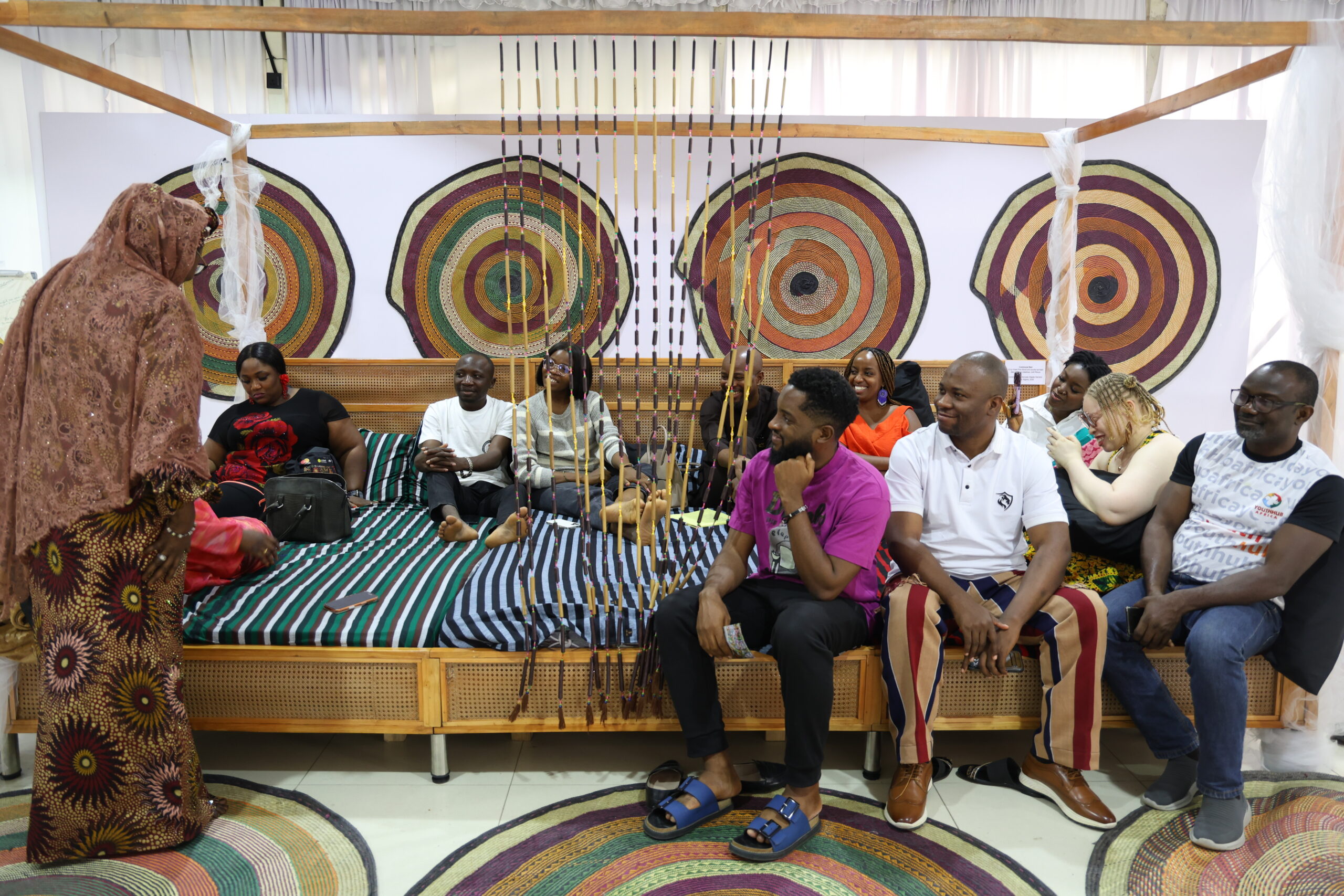
Our exhibition contained a Global Wall with a compilation of photos and stories from around the world collected through an online call. There were installations of beds, including a massive communal bed that we conceptualized and built with the help of a local carpenter. We also had a collection of personal writings, poetry, and photos on the wall. In one of the sections, we had a rest and meditation space with locally made mats for visitors to sit, pause, and reflect. Audio recordings played and filled the room with layers of people recounting personal stories and experiences of their beds.
In both Abuja and Lagos, guests immersed themselves in the space. They read. They lingered. They held conversations with strangers. They sat on the bunk bed and on the communal bed. They rested on the mats. A few even agreed to share their own stories and experiences on camera.
One guest told us, ‘ I will never see beds the same way again.’
Another guest was so moved to tears because memories of beds and the hospitality of people she met in her life flooded her mind. She expressed that the exhibition made her deeply reflect on what luxury meant in the context of beds.
Witnessing guests experience a transformation of thought after they entered the space and interacted with the works was truly something indescribable.

Why Life?
Life is grand and abundant, and so much of it passes by without us fully being aware of what it contains. In 2025, I began reading Look Again: The Power of Noticing What Was Always There by Tali Sharot and Cass R. Sunstein. This book explores how our brain, over time, stops noticing things and how we lose our sensitivity towards details of our lives simply because they are constant and we get used to them. The bed is an example of a constant in our lives that has become mundane, yet it is so essential.
Across cultures and geographies, the bed is an integral part of the human experience. It is both deeply personal and universal. We begin and end our day in a bed, yet this detail is largely unnoticed. Through this exhibition, we invited people to notice again, to pause, and hopefully see the significant role the bed plays in our lives.

Why Memory?
From the moment people entered the exhibition space, memory and connections were activated. The bunk bed evoked stories of boarding schools, childhood, and shared dormitories. The mats reminded one visitor of family gatherings in northern Nigeria, and evenings spent with loved ones, sitting close together with friends and connecting through long conversations. The Global Wall transported people to different seasons of their lives, such as childhood, migration journeys, hospitals, or new and unfamiliar cities.
The exhibition became less about objects but about recollection. The audio recordings captured stories that may have otherwise remained unspoken. The workshops we held created space for rich conversations on consent, dreams, dignity, intimacy, and gender roles.
Memories arrived with the people who entered the space. And when they left, they carried new ones with them.

Why Beds?
Now, for the ultimate question that many people have asked us: Why Beds?
Beds are universal. Beds carry our life story. Beds are not only objects in our homes, but they are surfaces that afford us rest and recovery and hold our bodies at their most unguarded.
Beds are vulnerable, and vulnerability carries complexity. Sometimes the bed carries memories of stress and trauma, and the energy remains if a release or change does not occur. It is a place where people connect, make love, climax, and experience various levels of intimacy. It is where life can be conceived and where life can expire. It is a place, a space, a surface, a container that holds us all, present and absorbing memory.
If we were plants, the bed would be the soil, nourishing, supporting, and sustaining what grows and what decays. The bed is a place of becoming.

The expansion of my mind and heart
These exhibitions have expanded both my thinking and my heart. Through the conversations and encounters with visitors, the depth and relevance of this project became undeniable.
The bed is a starting place for countless themes, from technology, well-being, health, love, healing, spirituality, and more. What began as a simple and playful idea has become greater than what we had imagined it to be.
I am excited for the expansion of this project and for it to reach more places around the world where relevant themes can be explored and connections can be strengthened through Life, Memory, and Beds.
In my work, I strive to place human connection at the center, and this exhibition does that. In a world that constantly emphasizes division, whether political, economic, cultural, or religious, there is a peaceful and powerful energy that emerges when we remember the things that connect us and make us human. And perhaps that is what Life, Memory, and Beds is inviting us all to notice again.

This is very beautiful and very educative. God bless you both for the expansion of knowledge.